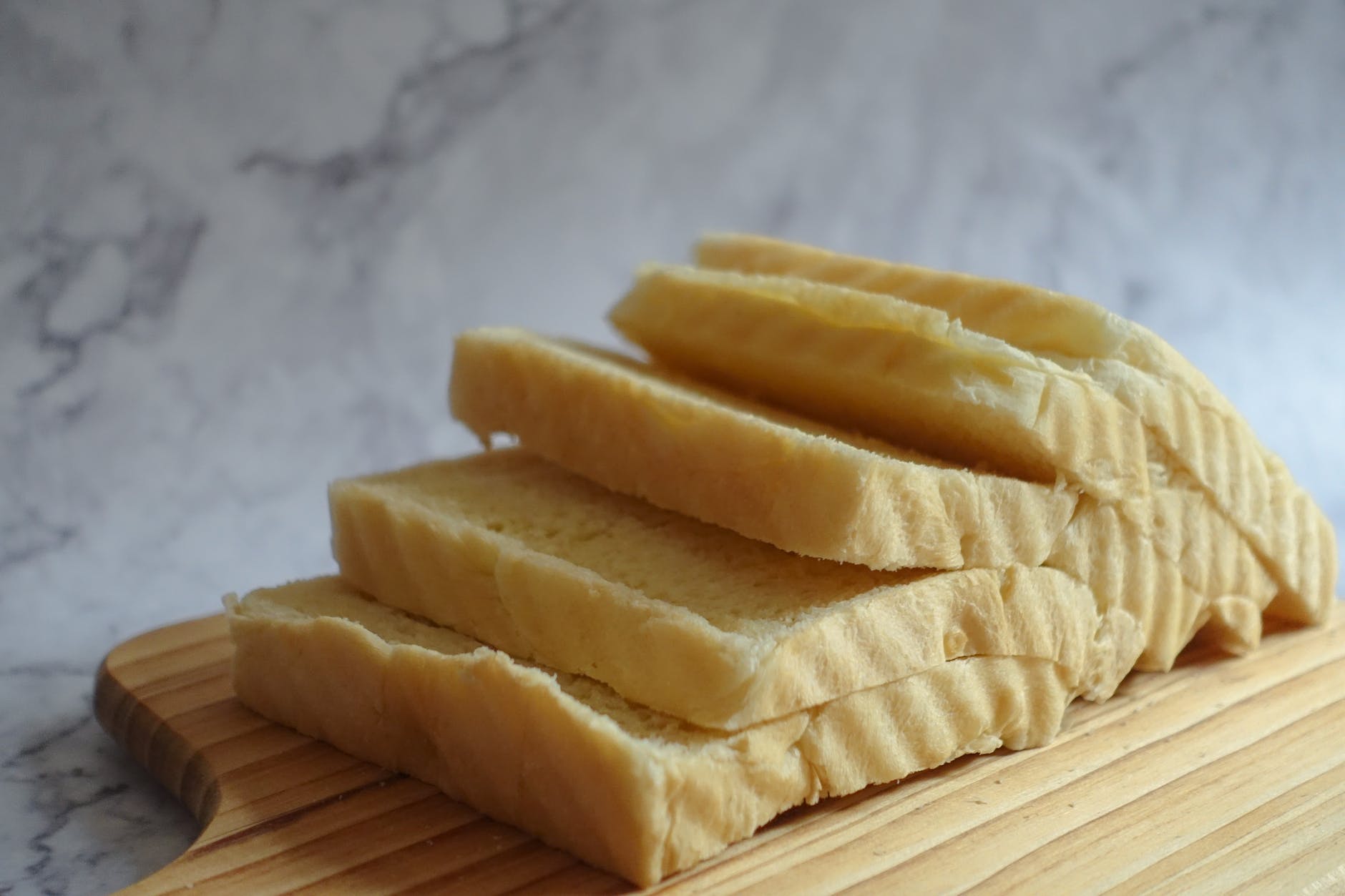
My daughter likes white toast bread. I have tried to convert her to sourdough bread instead as it is gut friendly but no success. One again in my quest of getting less ready made products and also due to the lockdown and covid-19, I wanted to be able to make a bread she likes. As Frenchies, we also love croque-monsieurs (grilled cheese with ham)…
Ingredients:
500 g spelt flour (Spelt is a pure non-hybridized, nutritious ancient grain. It contains less gluten than conventional wheat)
20 g unrefined sugar
10 g of fine salt – The healthiest forms of sea salt are the least refined with no added preservatives. I like to use pink Himalayan.
20 g fresh baker’s yeast or 7g dry yeast
20 cl of warm whole milk (not more that 30° C)
10 cl of water
30 g melted butter
Preparation:
Start by preparing all the ingredients because you want to add all your ingredient pretty quickly so you are not spoiling the yeast. It is best to use a kneading machine, but you can do it with your hands, it is perfectly fine and very satisfying. I usually do both. I start the dough with the machine and finish with my hands so I can measure the elasticity of the dough.
Melt the butter in the microwave or in a pan. Warm the milk so it is warm but not hot (30° C max.).
In a bowl, mix the flour with the sugar and the salt – Be very careful not to let the yeast touch directly the sugar or the salt or it will kill it. Add the yeast on top. Quickly add the melted butter making sure it is not touching the yeast, and quickly add the milk and the water. Knead everything at low speed or with your hands until all the elements are combined. When the ingredients are well mixed with each other, increase the kneading speed, and let knead for 8 to 10 minutes. The dough should come off the sides of the pan. When the dough is kneaded (after about 10 minutes of kneading). If you are using your hands, you can knead the dough on the table and fold it several times…To know the dough is ready, take the dough between your fingers and gently stretch it between your two hands. You must form a thin film of slightly translucent dough, without tearing it.
Take the dough, make a ball and place it in a bowl. Cover everything with a clean cloth, and leave to rise for 30 minutes. After 30 minutes, remove the cloth. The dough should have doubled in size.
Break the dough with your hands, plunging your fists into it in order to expel all the carbon dioxide that was produced during the rise. The dough will therefore lose volume.
Take the dough and arrange it lengthwise to fit in your loaf tin, folding it a little on itself so as to give it body. For this use your hands and the palm of the right hand, to bring the dough and make it adhere well. Do this over the entire length of the dough. Fold your do to bring it into a “sausage”.
Place the dough in the loaf pan and cover with a board and put some weight on it. You can also use a special loaf pan with a lid. This will constrain the bread when it rises to create this very fine bread…. Let the dough rise for 30 to 45 minutes.
Preheat the oven to 220 ° C.
At this stage the dough should have pushed whatever you have put on top of it… if you have used a lidded loaf pan the dough will have escaped from the tiny holes in the corners – remove the exceeding dough but leave the lid on, don’t open it. If you haven’t got a loaf pan with a lid, remove the board, place the pan in the oven and lower the temperature to 180 ° C. Bake for about 45 minutes. After 45 minutes, remove the bread from the pan and leave it to chill on a grid.

 MUM IS BACK